Feeding & plasticising
The rubber compound is fed into the IM unit, where it is preheated to around 80–100 °C and plasticised.

Custom manufacturing to customer specifications
GEVU manufactures technical rubber mouldings and vulcanised sealing frames to drawings or samples. Materials and designs are selected to meet your technical requirements.
Materials & applications
GEVU processes EPDM, NBR, NK/SBR, CR and silicone/VMQ in various colours and Shore A hardnesses.
Applications include window and façade construction, the rail vehicle industry, commercial vehicles, shipping, catering equipment and the automotive industry. Our industry pages provide guidance for your particular installation requirements.
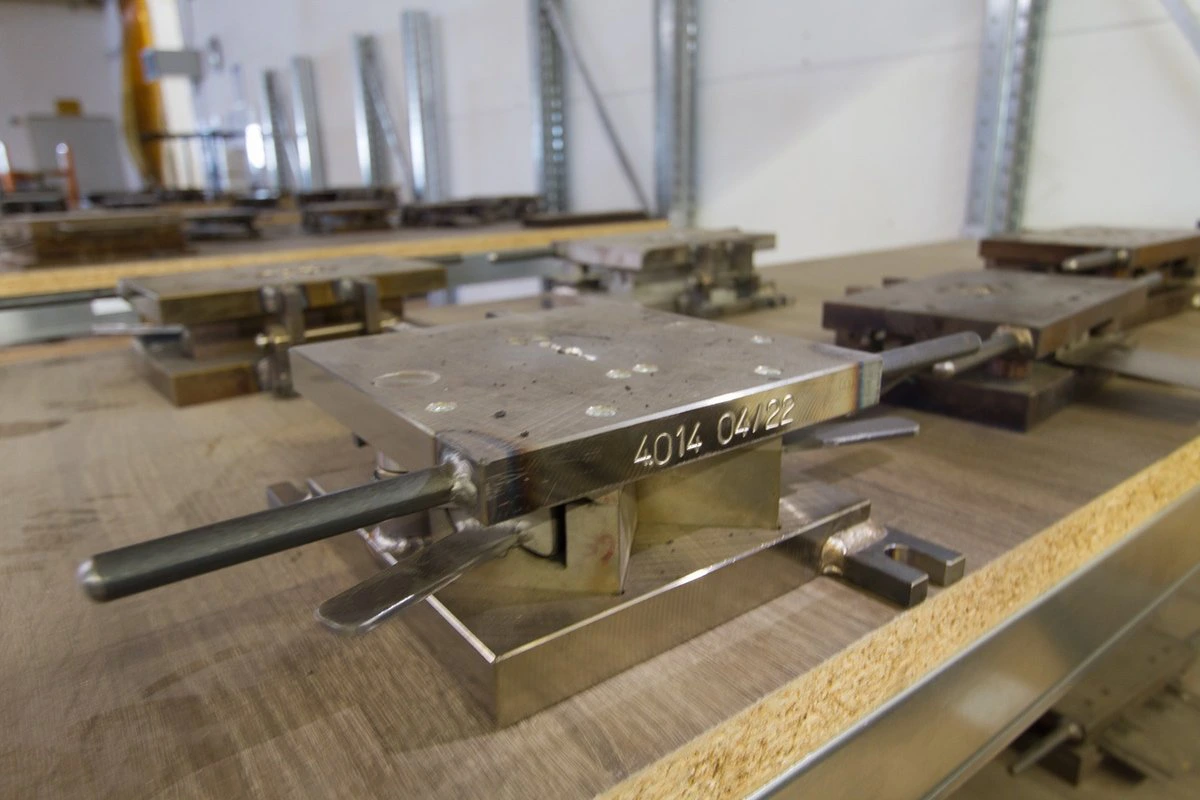
Injection moulding process
The rubber compound is fed into the IM unit, where it is preheated to around 80–100 °C and plasticised.
The compound passes through runner channels under variable pressure into the vulcanisation mould, heated to around 150–200 °C.
With specifically defined heating times, the geometry of the mould produces the rubber moulding required.
Why IM?
Plasticising in the injection plunger enables significantly shorter heating times than compression moulding.
Machine technology
Depending on the machine, injection takes place via a separate injection plunger or by moving the screw directly within the barrel.
View our machinery →From drawing to enquiry
To assess your component, GEVU primarily needs a drawing and a brief description of its application. Manufacturing from a sample is also possible; enquiries with drawings are preferred.
Please specify the required material, Shore A hardness, colour, quantity and packaging unit, where these have already been determined. Information about temperature and contact with liquids or other media helps with material selection.
Our checklist for rubber mouldings to drawings explains which documents and details are useful. Use our technical enquiry form to tell us about your project.
Would you like to have a rubber moulding or sealing frame manufactured? Describe your component and send us the documentation you have.